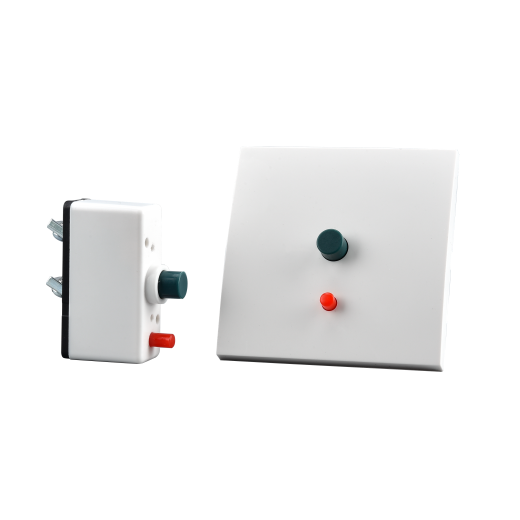
Safety switch applications are mainly related to safe power disconnection, equipment isolation, local power control, and maintenance safety in low voltage electrical systems. For B2B buyers, the key question is not only “What is a safety switch?” but also “Where should a safety switch be used, and what should I confirm before ordering?”
A safety switch should not be treated as the same product as a circuit breaker, residual current device, or ordinary wall switch. These products may work together in one electrical system, but they have different functions.
In practical projects, safety switches are commonly used near power entrances, distribution panels, motors, machines, air-conditioning equipment, workshop equipment, and OEM electrical assemblies. The correct selection depends on the application, current rating, voltage, pole number, enclosure requirement, load-breaking requirement, and maintenance needs.
This guide explains 7 common safety switch applications and the key buying points for distributors, importers, contractors, and OEM buyers.
1. Service Entrance and Main Power Disconnection
One important safety switch application is service entrance or main power disconnection.
In this type of installation, the safety switch is used as a clear power disconnecting point. It allows the power supply to be switched off before maintenance, inspection, or emergency handling. This is common in building electrical systems, small commercial facilities, equipment rooms, and some local power control points.
The main purpose is not to replace all protection devices. The purpose is to provide a visible and reliable way to disconnect power when required.
Buyers should confirm:
- Rated current
- Rated voltage
- Number of poles
- AC or DC application
- Whether it is used as the main disconnecting point
- Whether a lockable handle is required
- Whether clear ON/OFF indication is needed
- Indoor or outdoor installation
- Local market requirements
If the circuit also requires overload, short-circuit, or leakage protection, the safety switch may need to work together with suitable protective devices in the system.
2. Distribution Panels and Electrical Cabinets
Safety switches are also used in distribution panels and electrical cabinets for local power control and isolation.
In this application, the safety switch may be installed inside or near a panel to control power to a section of equipment, a sub-panel, or a specific electrical load. It helps technicians and operators clearly disconnect power before working on the panel or connected equipment.
Typical applications include:
- Small distribution panels
- Commercial electrical cabinets
- Equipment control boxes
- Sub-distribution systems
- Workshop power panels
- Machine control panels
This application is common for contractors, panel builders, OEM customers, and distributors who supply complete low voltage electrical assemblies.
Buyers should confirm:
- Panel size and installation space
- Mounting method
- Current rating
- Voltage rating
- Pole number
- Terminal type
- Cable entry direction
- Operating handle position
- Whether the switch needs to coordinate with other protective devices
- Label, marking, and packaging requirements
For panel applications, product size, wiring convenience, and stable batch supply are also important.
3. Motor and Machine Equipment
Motors and machines are one of the most practical safety switch applications.
A safety switch can be installed near a motor, machine, pump, compressor, conveyor, or other equipment to provide a local disconnection point. This helps maintenance personnel shut off power before servicing or checking the equipment.
Typical equipment includes:
- Electric motors
- Pumps
- Compressors
- Conveyors
- Packaging machines
- Ventilation equipment
- Small production machines
- Workshop equipment
For motor and machine applications, buyers should not choose only by appearance. The product must match the equipment current, voltage, phase, load type, and operating environment.
Buyers should confirm:
- Motor power or equipment rated current
- Rated voltage
- Single-phase or three-phase system
- Pole number
- Load type
- Whether load breaking is required
- Whether OFF-position locking is required
- Whether the switch is close enough to the equipment
- Whether the system already has upstream protection
- Indoor or outdoor installation environment
In many machine applications, the safety switch is part of the power control and maintenance safety arrangement. It does not replace all protection devices by itself.
In industry references, safety switches are commonly described as devices used as disconnecting means for service entrance or for lockout/tagout procedures on motors and critical power equipment, which matches the application-focused approach of this article.[Eaton explains this use clearly in its safety switch fundamentals guide]
4. Industrial Workshop and Equipment Power Control
Safety switches are commonly used in industrial workshops where machines, tools, and equipment need reliable local power control.
In these environments, the product may face dust, vibration, frequent operation, humid conditions, or rough handling. Buyers should pay more attention to the enclosure, mechanical strength, wiring space, and long-term durability.
Typical applications include:
- Workshop equipment
- Production lines
- Small industrial machines
- Processing equipment
- Local power control points
- Maintenance zones
- Plant room equipment
For industrial buyers, reliability and clear operation are important. A safety switch should be easy to identify, easy to operate, and suitable for the installation environment.
Buyers should confirm:
- Current and voltage rating
- Installation environment
- Enclosure requirement
- Dust and moisture exposure
- Operating frequency
- Locking requirement
- Cable entry and wiring space
- Mounting position
- Maintenance access
- Required certification or test document
Industrial applications should not be selected only by current rating. Environment and operation conditions are equally important.
5. Air-Conditioning and HVAC Equipment in Specific Markets
Air-conditioning and HVAC equipment can also be an important safety switch application in certain markets.
This is especially common in some West African, French markets, where buyers may request safety switches for outdoor air-conditioning units or equipment-side power control.
This does not mean HVAC is the only safety switch market. It is simply one practical application where buyers often need a local power disconnection point near the equipment.
Typical applications include:
- Outdoor air-conditioning units
- Small HVAC equipment
- Ventilation equipment
- Compressors
- Building service equipment
- Local equipment power control
In this application, the switch may be installed near the equipment so technicians can disconnect power before maintenance.

Buyers should confirm:
- Equipment rated current
- Rated voltage
- Indoor or outdoor use
- Weather exposure
- Enclosure protection requirement
- Pole number
- Cable entry direction
- Whether a lockable handle is required
- Whether upstream protection already exists
- Target market requirements
For these markets, product appearance, label language, packaging, and local buyer habits may also affect sales.
6. Local Maintenance Power Isolation
Local maintenance power isolation is one of the most important safety switch applications for equipment installed away from the main panel.
When a machine or electrical device needs maintenance, technicians need a clear way to disconnect power near the working area. A safety switch can help provide a local OFF point before inspection, cleaning, adjustment, or repair.
Typical applications include:
- Machines installed far from the main panel
- Pumps in equipment rooms
- Ventilation systems
- Compressors
- Small production equipment
- Serviceable electrical equipment
- Local maintenance stations
In this application, the switch location and handle design are very important. The operator should be able to identify the power status clearly and lock the switch in the OFF position when required by the maintenance procedure.
Buyers should confirm:
- Whether the switch is installed near the equipment
- Whether the ON/OFF position is clear
- Whether OFF-position locking is required
- Whether the switch is easy to access
- Whether the enclosure suits the environment
- Whether cable entry is convenient
- Whether the product supports the maintenance process
- Whether other protection devices are already installed in the system
This application should not be treated as a normal control switch. It is about safe power isolation for maintenance.
7. OEM Equipment and Electrical Assembly Projects
Safety switches are also used in OEM electrical assemblies, distribution boxes, and equipment control systems.
For OEM buyers, the application is not only about one product. They usually care about stable supply, consistent appearance, easy installation, clear labeling, customized packaging, and long-term cooperation.
Typical OEM applications include:
- Distribution boxes
- Equipment control boxes
- Electrical assemblies
- Small machine panels
- Power control modules
- Private-label electrical products
- Project-based electrical cabinets
In these projects, the safety switch may be combined with other electrical components according to the system design. The buyer needs a complete and stable product supply rather than a single isolated model.
Buyers should confirm:
- Product size
- Mounting method
- Terminal structure
- Wiring space
- Rated current and voltage
- Pole number
- Handle type
- Product appearance consistency
- Logo and label requirements
- Instruction sheet language
- Packaging method
- Order quantity
- Long-term supply stability
For OEM buyers, product consistency and supplier communication are often as important as the electrical parameters.
How Buyers Should Choose the Right Safety Switch Application
The correct product selection should start from the application.
Before asking for a quotation, buyers should prepare clear information about:
- Application scenario
- Equipment or circuit type
- Rated current
- Rated voltage
- Single-phase or three-phase system
- Pole number
- Indoor or outdoor installation
- Load type
- Load-breaking requirement
- Lockable handle requirement
- Enclosure requirement
- Cable entry direction
- Target market
- Certification or documentation needs
- Packaging and logo requirements
This information helps suppliers recommend the correct product faster and reduces the risk of wrong selection.
Common Mistakes in Safety Switch Applications
Mistake 1: Treating a Safety Switch as an Ordinary Wall Switch
An ordinary wall switch is used for simple control. A safety switch is selected for safe disconnection, power isolation, equipment-side control, or maintenance-related applications.
Mistake 2: Confusing System Protection with Safety Switching
Circuit breakers, residual current devices, and safety switches have different functions. They may work together, but they should not be treated as the same product.
Mistake 3: Ignoring Load-Breaking Requirement
Some applications require the switch to disconnect under load. Buyers should confirm whether the selected product is suitable for the actual switching duty.
Mistake 4: Selecting Only by Current Rating
Current rating is important, but it is not enough. Voltage, pole number, installation environment, enclosure, and operating condition also matter.
Mistake 5: Ignoring Installation Environment
Outdoor, dusty, humid, or industrial environments may require stronger enclosure design and better installation planning.
Mistake 6: Not Confirming the Real Application
The same product may be used in different scenarios, but the buying requirements can be different. A motor application, panel application, and HVAC application should not be treated exactly the same.
Where JIELI Products Fit
JIELI supplies low voltage electrical products for safety switch applications, including safety switches and related distribution board components.
For B2B customers, JIELI can support applications such as service entrance disconnection, distribution panels, machine equipment, motor systems, HVAC equipment in specific markets, local maintenance power isolation, and OEM electrical assemblies.
The right model should be selected according to the application, rated current, rated voltage, pole number, installation environment, enclosure requirement, packaging needs, and target market.
FAQ
1. What are common safety switch applications?
Common safety switch applications include service entrance disconnection, distribution panels, motors, machines, industrial equipment, HVAC equipment in specific markets, local maintenance power isolation, and OEM electrical assemblies.
2. Can a safety switch be used near a motor?
Yes. A safety switch can be used near a motor or machine as a local power disconnection point, if the product rating and application requirements are suitable.
3. Can a safety switch replace a circuit breaker?
No. A safety switch and a circuit breaker have different functions. In many systems, the safety switch may need to work together with suitable protection devices.
4. What should buyers check before ordering a safety switch?
Buyers should check application, rated current, rated voltage, pole number, load type, installation environment, load-breaking requirement, locking requirement, enclosure, certification, and packaging.
5. Is a safety switch used for HVAC equipment?
Yes, in some markets safety switches are used near air-conditioning or HVAC equipment for local power disconnection. Buyers should confirm the equipment rating and installation environment.
6. Is a safety switch only used in industrial systems?
No. Safety switches may be used in residential, commercial, industrial, equipment-side, and OEM applications depending on the product type and system design.
7. What information should distributors provide when asking for a quote?
Distributors should provide application, current, voltage, pole number, indoor or outdoor use, equipment type, load-breaking requirement, target market, packaging requirement, and order quantity.
Conclusion
Safety switch applications are mainly about safe power disconnection, equipment-side control, power isolation, and maintenance safety.
A safety switch should not be confused with an ordinary wall switch, circuit breaker, or residual current protection device. These products may work together in one electrical system, but they have different functions.
For B2B buyers, the best way to select a safety switch is to start from the real application. Once the application is clear, buyers can confirm current, voltage, pole number, load type, installation environment, lockable handle, enclosure requirement, certification, and packaging.
This approach helps reduce wrong selection and makes supplier recommendations more accurate.